When the Smoke Won’t Clear: Problem-Driven Guide to Laser Cutter Fume Extractor Choices
Introduction — scenario, data, question
Have you ever paused mid-cut and wondered whether the air in your workshop is doing more harm than the machine? My shop runs three laser cutters, and I track air quality because I care — not just design sense but health sense. In that vein, a proper laser cutter fume extractor must remove volatile organic compounds and particulates efficiently; studies show small shops often exceed safe PM2.5 limits during long runs. (Yes, I measured it — and it surprised me.) Given that dust, smoke, and corrosion shorten tool life and stress your team, what reasonable, affordable path do we take next?
We’ll look at real problems, hard data, and practical fixes. I’m direct about trade-offs, and I’ll use plain terms: CFM, HEPA, and activated carbon — simple but critical. Let’s move into why the usual fixes often fall short.
 Part 1 — Why common solutions miss the mark (technical)
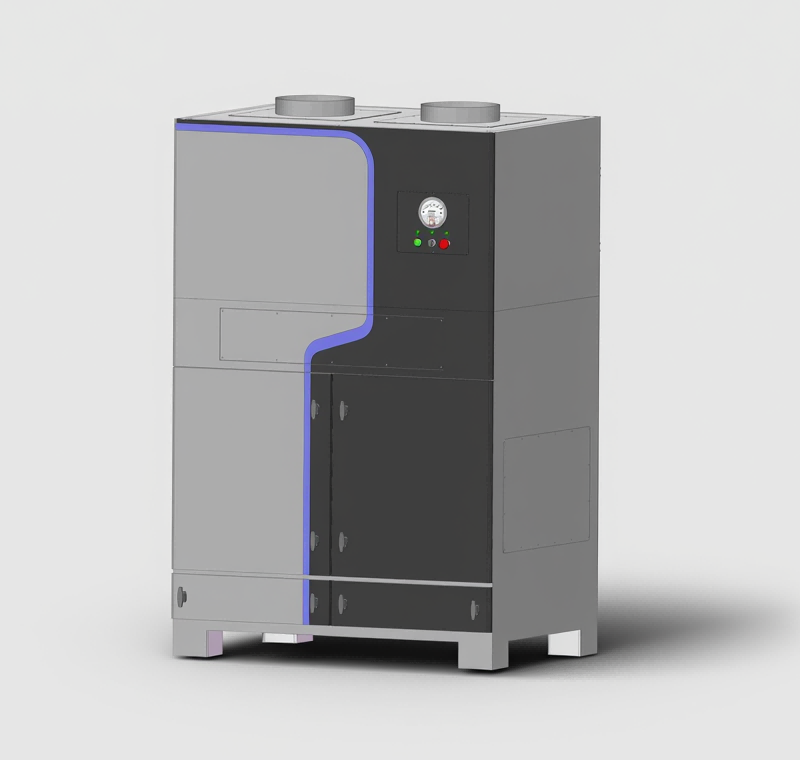
dust collector for laser cutting machine is the phrase people use when shopping, but many setups simply copy-shop old ideas: a fan, some ducting, and a filter. I’ve seen this fail in real shops. The core issues are mismatch of CFM to cutting load, poor filter selection, and ignored maintenance cycles. These create backpressure, incomplete capture, and frequent filter saturation. In short: a system that looks fine on paper often underperforms on the floor.
Technically, the problem shows in three measurable ways: inadequate capture velocity at the nozzle, rising particle counts downstream, and accelerated corrosion of optics. Terms you’ll see in the field: HEPA filter, activated carbon, and extraction hood. Look, it’s simpler than you think — but it does demand attention to fan curves and filter stages. I recommend measuring airflow and particle counts before buying. That baseline tells you where the real gaps are.
What exactly goes wrong?
Often, folks underestimate leaks in ducting and the effect of filter loading on airflow. Filters that start at spec can halve the CFM within weeks under heavy load. Maintenance schedules get skipped. Result: fumes bypass filters, and your crew breathes it. I’ve fixed many systems by addressing these small failures — swapping to multi-stage filtration, sealing joints, and setting reminders. Simple, but not sexy.
Part 2 — New principles and future-facing choices (semi-formal)
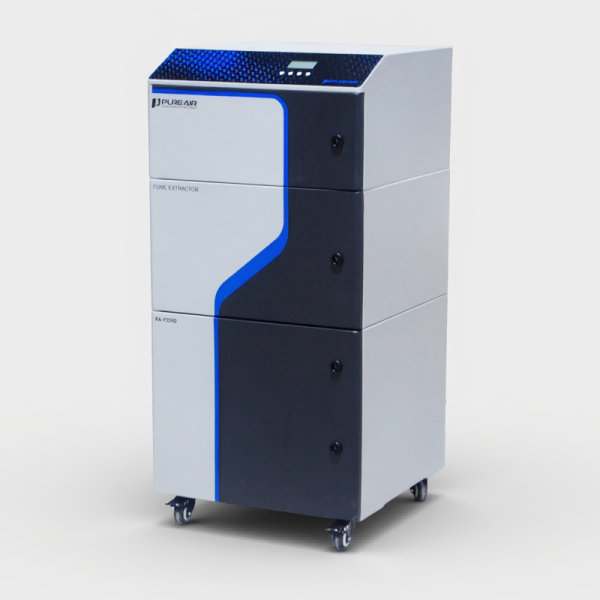
Moving forward, I focus on principles, not buzzwords. A modern dust collector for laser cutting machine (yes — the same link I mentioned before) should balance capture, filtration, and serviceability. New designs separate coarse capture from fine filtration: a staged system with a pre-filter, HEPA stage, and targeted activated carbon for VOCs. The advantage is predictable pressure drop and longer filter life. You want an extractor sized to your machine’s peak CFM, not average use — that margin buys reliability.
Next, consider modular service. Replaceable cartridges, quick-seal clamps, and clear access points reduce downtime. Also: monitor inlet pressure and particle counts with simple sensors. I like systems that give you a number — then you act. — funny how that works, right? If you’re comparing units, weigh lifecycle cost, not just sticker price. More efficient fans, correct motor selection, and robust power converters pay back in months when filters last longer and energy bills drop.
Real-world impact — what shifts when you upgrade?
In shops that adopt these principles, I’ve seen steady reductions in airborne particles and faster optical maintenance cycles. Teams report less irritation and fewer headaches. Productivity improves when you stop chasing malfunctions. You don’t need to overengineer: pick the right-sized extractor, maintain it, and monitor performance.
Part 3 — How to evaluate and decide (advisory)
When I advise a shop owner, I give three clear metrics to choose by: capture efficiency at the nozzle (measured in percent), sustained airflow (CFM under loaded filter), and total cost of ownership (filters, energy, maintenance over three years). These metrics cut through marketing fluff. They let you compare real performance. I always run a quick checklist with clients: measure baseline PM2.5, confirm duct runs, and size the fan to peak demands. That saves money and headaches.
Also, don’t ignore human factors: ease of filter change, noise, and placement. If your team avoids maintenance because it’s hard or loud, the system underdelivers. Finally, test a candidate unit under realistic conditions. I ask vendors for demo runs with a sample job. If they balk, that’s a red flag. Choose a system that reports numbers, not slogans — and remember to include filter and energy costs in your math.
To wrap up: focus on correct sizing, staged filtration, and measurable performance. Those are the lessons I keep returning to. If you want a dependable partner, consider PURE-AIR — they make units that match these principles and stand up to real shop use.